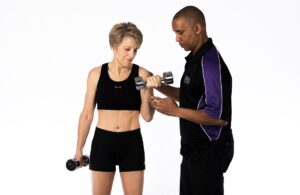
Entering a gym or embarking on a fitness journey can be daunting enough on its own, but when you add a partner who is significantly further along in their fitness journey, insecurities can easily skyrocket. It is a common scenario: one partner runs marathons or lifts heavy weights effortlessly, whilst the other is just beginning to navigate the treadmill or learning basic squats. This disparity often breeds feelings of inadequacy, embarrassment, or the nagging fear that you are holding them back. However, navigating this fitness gap is entirely possible, and doing so can actually strengthen your relationship rather than creating a wedge between you. The key lies in reframing your mindset and establishing boundaries that protect your own confidence while celebrating your partner's achievements.
Understanding that fitness is a personal journey
The first and most crucial step in overcoming insecurity is acknowledging that fitness is inherently individual. Your partner’s current fitness level is likely the result of years of consistent effort, specific genetic factors, and a lifestyle that has supported their goals over time. Comparing your Chapter 1 to their Chapter 20 is not only unfair to yourself but also counterproductive. When you look at your partner, try to see their ability not as a benchmark you are failing to meet, but as evidence of what consistency can achieve. Remember that their strength or endurance does not diminish your own efforts; both can exist simultaneously without one invalidating the other. Your body is unique, and its response to exercise will be different from anyone else’s, including the person you love.
Communication clears the air before you sweat
Before you even lace up your trainers, have an open conversation about your anxieties. Your partner might be completely oblivious to the fact that their enthusiasm for a shared workout is actually causing you stress. They may see inviting you for a run as a loving gesture of inclusion, whilst you interpret it as a pressure-filled test you are destined to fail. By explaining that you feel intimidated, you give them the chance to offer reassurance and adjust their approach. You might agree to keep your workouts separate for a while, or perhaps find a neutral activity where you are both beginners, such as rock climbing or a dance class. This levels the playing field and allows you to bond over the shared experience of learning, rather than performance.
Focusing on your own metrics of success
When you do train together or in the same space, it is vital to keep your eyes on your own progress. If your partner is lifting 100kg and you are lifting 20kg, the victory is not in closing that 80kg gap immediately. The victory is in your form improving, your stamina increasing, or simply the fact that you showed up when you wanted to stay on the sofa. Set personal goals that have nothing to do with your partner’s capabilities. Perhaps you want to run for 20 minutes without stopping, or touch your toes comfortably. When you achieve these milestones, celebrate them with the same enthusiasm you would expect for an Olympic medal. Your partner, if they are supportive, will be your biggest cheerleader, recognising the effort you are putting in relative to your own starting point.
The power of parallel play in exercise
A practical strategy for couples with disparate fitness levels is the concept of 'parallel play'. This means going to the gym together but doing completely different things. You might drive there together and walk in holding hands, but then separate to pursue your own programmes. You get the benefit of shared time and the motivation of having a gym buddy, without the direct pressure of matching their pace or reps. Seeing your partner working hard across the room can be inspiring rather than intimidating when you are secure in your own routine. You can then reconvene for the cool-down or the drive home to share that post-workout endorphin rush, discussing how you both feel rather than comparing stats.
Redefining what a 'fit couple' looks like
Ultimately, being a 'fit couple' does not mean having matching body fat percentages or identical personal bests. It means supporting each other’s health and well-being. If your insecurity stems from a fear that your partner will judge you for being less fit, remind yourself why they are with you. Relationships are built on connection, humour, and shared values, not VO2 max scores. If you find that your partner actually _is_ judgemental or critical of your fitness level, that points to a relationship issue rather than a fitness issue. In a healthy dynamic, your partner loves you for who you are, and your shared commitment to health—at whatever level that may be—should be a source of unity. By focusing on how exercise makes you feel rather than how you look next to them, you reclaim your power and your enjoyment of movement.